Content & Algorithm
The first 3 lines: how to write a hook that grabs attention
In the feed, people only see the first lines of your post before "see more".
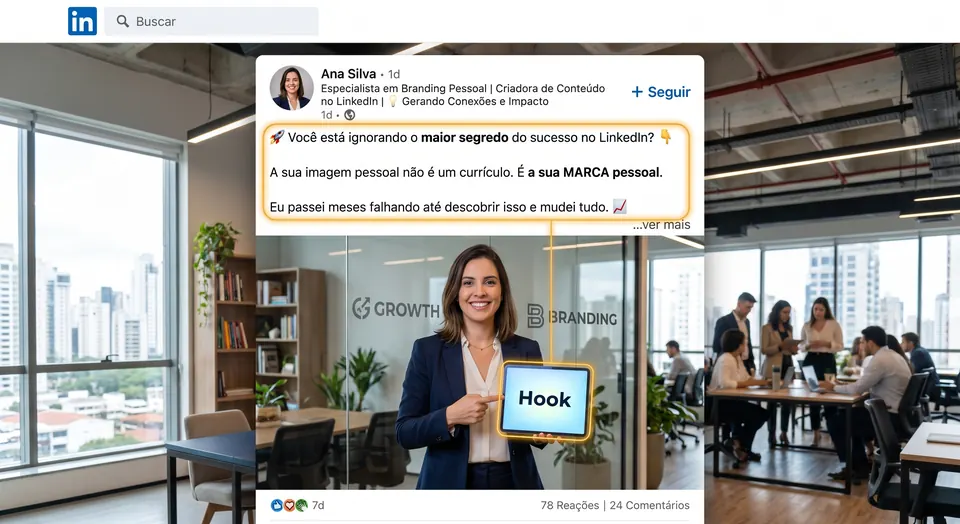
You may have written the best post in the world, but on LinkedIn it appears cut off: only the first lines show in the feed, followed by the "see more" button. Those opening lines are your hook, and on their own they decide whether someone stops to read or simply scrolls past.
A hook's job is to buy attention
Attention is the most contested resource in the feed. Your hook doesn't need to deliver everything; it needs to create a tension that only clicking "see more" resolves. A provocative question, a surprising fact, a counterintuitive statement or the start of a story work because they open a loop the brain wants to close.
Hooks that tend to work
- Contradiction: "I did everything right. It still didn't work."
- Unexpected fact: "Only a small share of people on LinkedIn do this."
- Direct question: "Have you ever lost an opportunity without even knowing it?"
- Concrete promise: "There's a 5-minute fix for this."
- Story opener: "A year ago, my profile was going nowhere."
What kills a hook
Long, bureaucratic openings, too much context before the point, or generic lines that could belong to any post: all of these sink a hook. Save the warm-up for later, because the first lines exist to hook. Context comes once the reader has already decided to keep going.
Mastering the hook is one of the highest-impact skills in writing for LinkedIn. Without it, even great content stays invisible. With it, simple ideas get the reach they deserve.