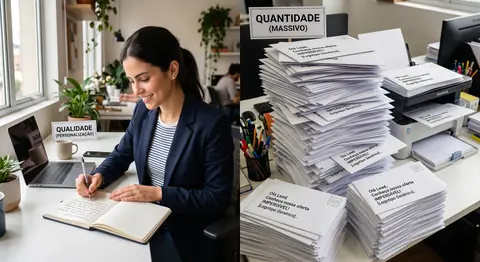
Cold messages that work: what to say when you first reach out
Cold messages have a terrible reputation, and most of them earn it.
2 min read · By the LinkedVix team · Updated
A cold message is contact with someone who doesn't know you. Most fail because they're generic, self-centered and obviously trying to sell. Writing off cold outreach entirely is a mistake, though: done well, it's still a legitimate tool for prospecting and networking. The secret lies in what you say in the first few lines.
Cold messages have a terrible reputation, and most of them earn it. Still, there's a way to make first contact that gets a reply instead of a block.
Why most cold messages die
They fail because they ignore the recipient. They open by talking about the sender, dump an offer, and give no context or reason to care. Faced with that, the reader's brain does the obvious thing: it ignores the message. Without relevance and respect for the other person's time, no cold message works.
What to say in your first message
Lead with them: show you've researched who they are
Give a clear, relevant reason for reaching out
Keep it short: respect the reader's time
Skip the pitch in the first message: the goal is to open a conversation
Make replying easy with a simple question or a light invitation
Context turns cold into warm
What separates a cold message that works from one that fails is context. Mentioning something specific about the person, a shared interest or something they posted shows you're not blasting the same text to hundreds of people. Suddenly the message stops being an intrusion and becomes contact with a purpose.
Well-crafted cold messages, personalized and focused on the recipient, still open doors. The tool is the same; what has changed is the level of care it demands. People who invest in that care stand out in a sea of lazy outreach.
Most cold messages fail because they start with the sender instead of the recipient. A short message with a specific, relevant reason to reach out is far more likely to earn a reply.
Frequently asked questions
Can you sell on LinkedIn without being pushy?
Yes, and that's the heart of social selling. Sales on LinkedIn tend to grow from relationships, presence and authority rather than copy-and-paste messages. The right approach attracts clients instead of driving them away.
How long should a cold message on LinkedIn be?
Short enough to read in a few seconds. A few sentences usually do it: who you are in one line, why you're reaching out to this person specifically, and one easy question. Anything longer risks being skipped.
Should I follow up if I don't get a reply?
One polite follow-up after several days is reasonable, ideally adding something useful such as a relevant resource or idea. Repeated nudges tend to feel like pressure and can damage the relationship before it starts.
Why does my profile matter when I send cold messages?
Most people check your profile before replying, so a clear headline and About section that explain who you help make a reply more likely. LinkedVix's Premium Profile Review gives you a written diagnosis with prioritized fixes, by email within 48 hours.
Pitching a cold contact is like asking a stranger on the street for a favor. Warming up the relationship first can change the answer you are likely to get.
Between meeting someone and closing a deal there's a path with clear stages. Skipping them is why so much LinkedIn sales outreach falls flat. Here's the map.