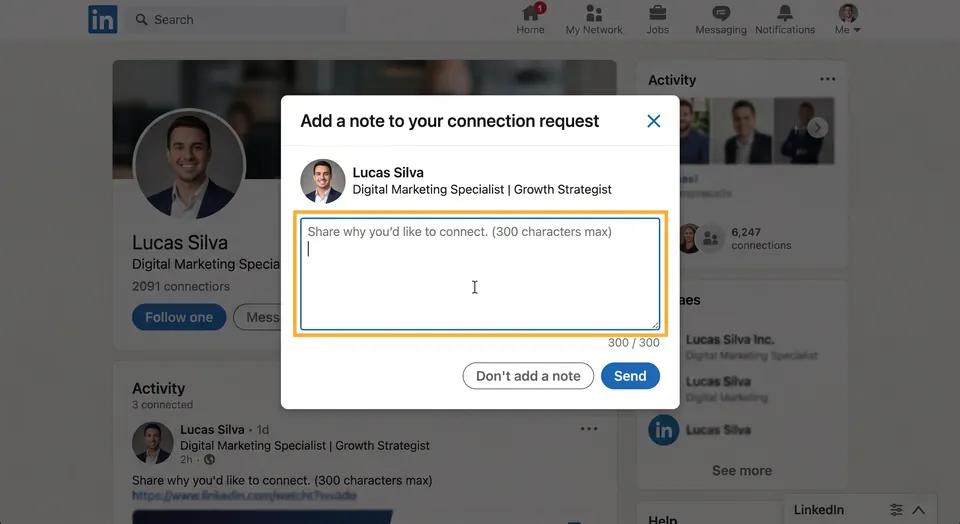
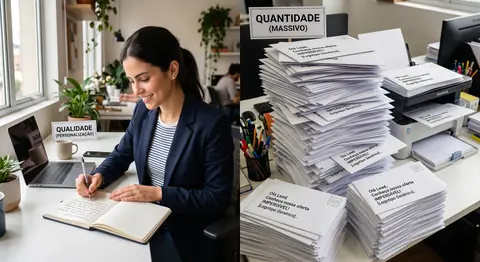
Your connection request is your first word to someone on LinkedIn.
2 min read · By the LinkedVix team · Updated
Every day, a huge number of connection requests go out on LinkedIn. Most are generic, with no context, and disappear among all the others. A few open doors, start conversations and create opportunities. The difference between the two groups is rarely luck. It comes down to intention and care in how you reach out.
Your connection request is your first word to someone on LinkedIn. It can start a valuable relationship, or be ignored and forgotten in seconds.
Why the default request falls flat
Sending a request with no note, or with the default text, signals that you're just adding numbers. The other person doesn't know who you are, why you connected or what to expect. Without context, there's no reason to reply, and the connection, even if accepted, ends right there.
What gets a message answered
A clear reason to connect (something in common, a shared interest, a referral)
Real personalization that shows you looked at their profile
A respectful, human tone, neither stiff nor overly familiar
No ask in the first message: connect first
Brevity: a few lines that are easy to read and answer
Connect first, sell later
The most common mistake is treating a new connection as the start of a sale. Sending an invite and then immediately pitching an offer is the fastest route to being ignored or blocked. The only goal of the first message is to open the relationship. Trust and opportunity come later, with time and relevance.
A good connection message is short, specific and generous. It plants the start of a relationship, and on LinkedIn, relationships are what tend to create opportunities over time.
A connection request with no note or the default text signals that you're just adding numbers, so without context there is little reason for anyone to reply.
Frequently asked questions
Can I sell on LinkedIn without being pushy?
Yes, and that is the heart of social selling. Sales on LinkedIn tend to grow out of relationships, presence and authority, rather than copy-and-paste pitches. The right approach attracts clients instead of pushing them away.
Should I always add a note to a LinkedIn connection request?
When you're reaching out to someone you don't know, a short note usually helps. One or two lines explaining why you want to connect gives the other person context and a reason to accept and reply.
Does LinkedIn work for freelancers and small businesses?
It often does. A well-positioned profile is one of the most accessible ways for freelancers, consultants and small businesses to create opportunities, and it can perform well compared with paid channels.
How soon will I see clients from LinkedIn?
It varies. Visibility indicators such as profile views and search appearances can move fairly early, while a steady flow of business opportunities usually comes from consistent, strategic presence over time.
Pitching a cold contact is like asking a stranger on the street for a favor. Warming up the relationship first can change the answer you are likely to get.
Cold messages have a bad reputation, and most earn it. Yet there's a way to make first contact that gets a reply instead of a block. Here's what to say.